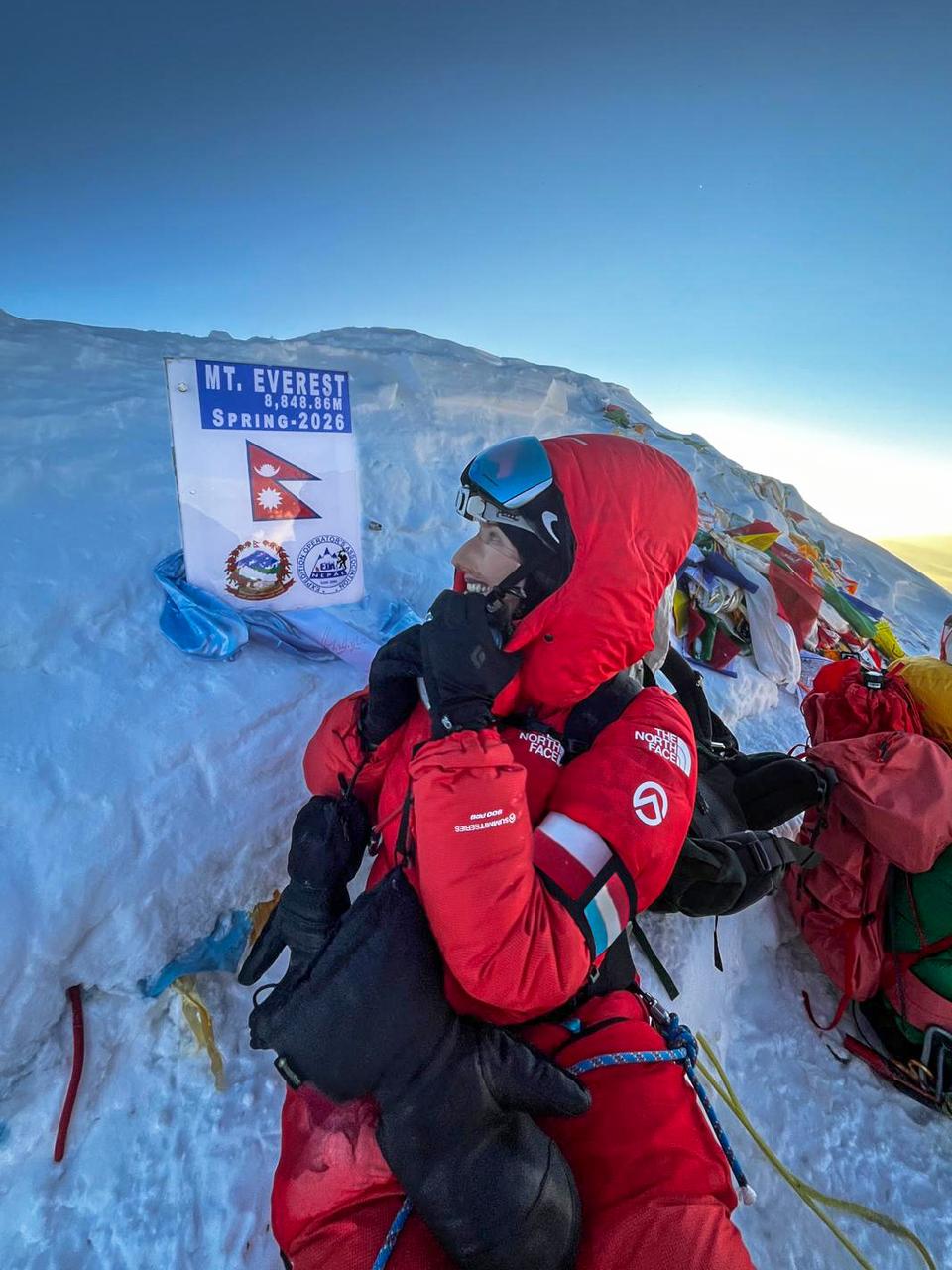
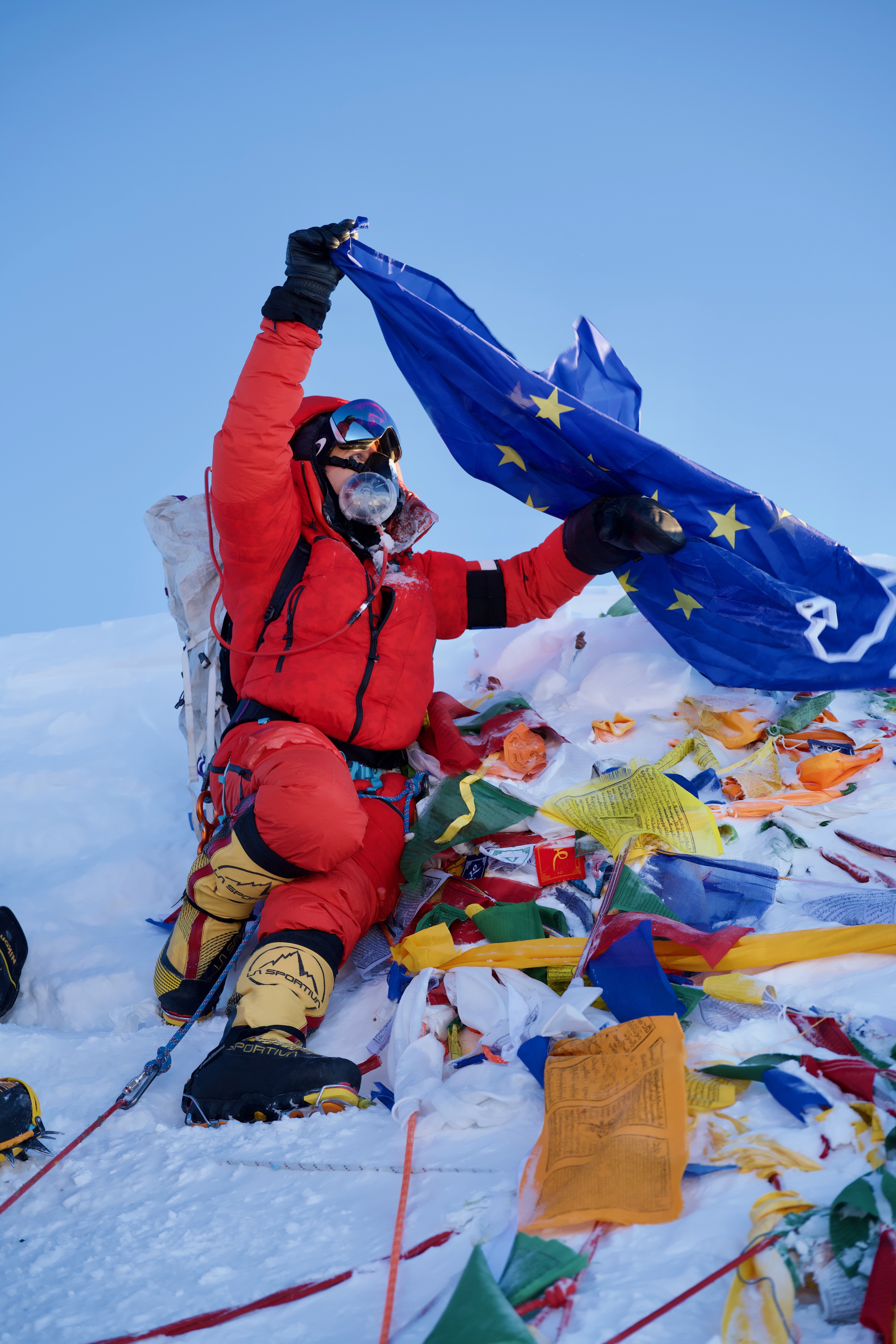
Portrait of Sandra Wieliczko, the first Luxembourgish woman to summit Mount Everest
Through this new interview feature, FLERA shines a spotlight on an inspiring member of our community who powerfully embodies its values and commitment.
We had the privilege of speaking with Sandra Wieliczko, the first Luxembourgish woman to reach the summit of Mount Everest, on May 20, 2026. An extraordinary journey that strongly resonates with our federation’s commitment to responsible, engaged, and inspiring mountain practice.
In this interview, Sandra reflects with clarity and humility on her path, the demands of such a project, and the reality of high-altitude mountaineering. More than an achievement, her ascent represents a long-term commitment, rigorous preparation, and a deep sense of responsibility.
An inspiring encounter that reminds us that the highest summits are built step by step.
Who is Sandra, first and foremost?
Anaïs Bourin : What do you do professionally, and how do you balance your career with your passion for mountaineering?
Sandra Wieliczko : I work at the European Investment Fund (EIF), a subsidiary of the European Investment Bank Group. At the EIF we implement financial instruments that absorb part of the risk that is taken by financial intermediaries when they finance small businesses across Europe. Balancing a full-time career during the expedition cycle requires planning, discipline and, above all, support. This expedition would not have been possible without my colleagues, who took care of my responsibilities while I was away, and for this I am deeply grateful. Working at the EIF is meaningful to me not only because of its purpose-driven mission, but also because of the people with whom I share this professional journey.
Anaïs : How did Luxembourg shape you, and was mountain climbing even part of your world growing up?
Sandra : Luxembourg has shaped an important part of my life. I am grateful to live in a country whose openness, opportunities and outward-looking spirit encouraged me to think beyond what I had once considered possible. In that sense, Luxembourg became the place where the idea of Everest was born, and where the project ultimately took shape.
Anaïs : Is there someone in your life — a family member, friend, or mentor — who has played a key role in making you who you are today?
Sandra : I have been shaped by many people at different stages of my life, starting with my parents, who encouraged me to set ambitious goals and pursue them. Everest was also the result of a chain of people who encouraged the next right step at the right moment, and of the quiet support of those closest to me. At the same time, it required a level of ownership that no one else could take on my behalf.
A passion for the mountains
Anaïs : When and how did the mountains first enter your life? Do you remember your first real hike or climb?
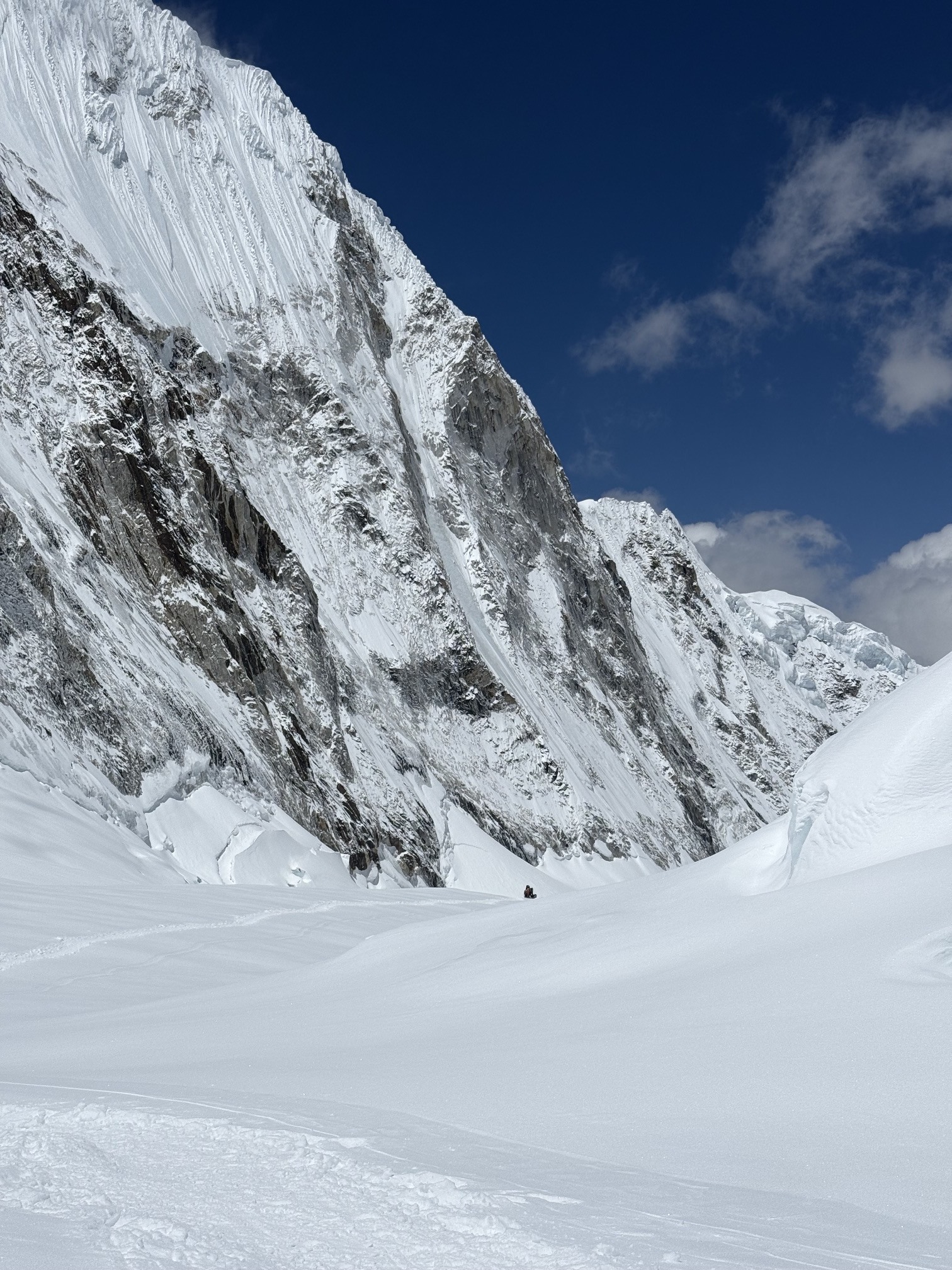
Sandra : The mountains entered my life gradually, through curiosity and the discovery that effort and perspective often go together. My first hiking shoes were bought in Luxembourg, and my first hikes began here with a friend, exactly five years ago.
Anaïs : What kind of inspiration does being in the mountains bring to your life? What does the mountain give you that nothing else can?
Sandra : The mountains give me focus: they strip everything down to preparation, decisions and the next step. At altitude, I also perceive them almost like abstract art – the spaciousness, shapes and colours can resonate with me in a similar way as standing before a work at MUDAM. And then there is the endurance aspect: the simple, humbling and deeply rewarding experience of physical movement outdoors.
Anaïs : Before Everest, which ascents marked you the most? Which ones taught you the most about yourself?
Sandra : The Matterhorn marked me strongly. We climbed in a very narrow weather window, after a storm had left several people caught in difficult conditions the day before. Fear was present, but so was trust: in my preparation, in my guide, and in the discipline of staying focused on what could be controlled. That ascent taught me that even with preparation and technology, the mountain always has the final say.
“The mountain itself does not care who you are, but representation matters, especially in spaces where women are still less visible. Seeing women present in high-altitude climbing can help someone else take the leap.”
The Everest project
Anaïs : When did the idea of attempting Everest first take shape? Was it a long-held dream or a more spontaneous decision?
Sandra : Everest was neither spontaneous nor a childhood dream. It became a realistic objective over time, as my experience grew and I began to understand what such a project would truly require.
Anaïs : How did you prepare for this project — physically, logistically, financially?
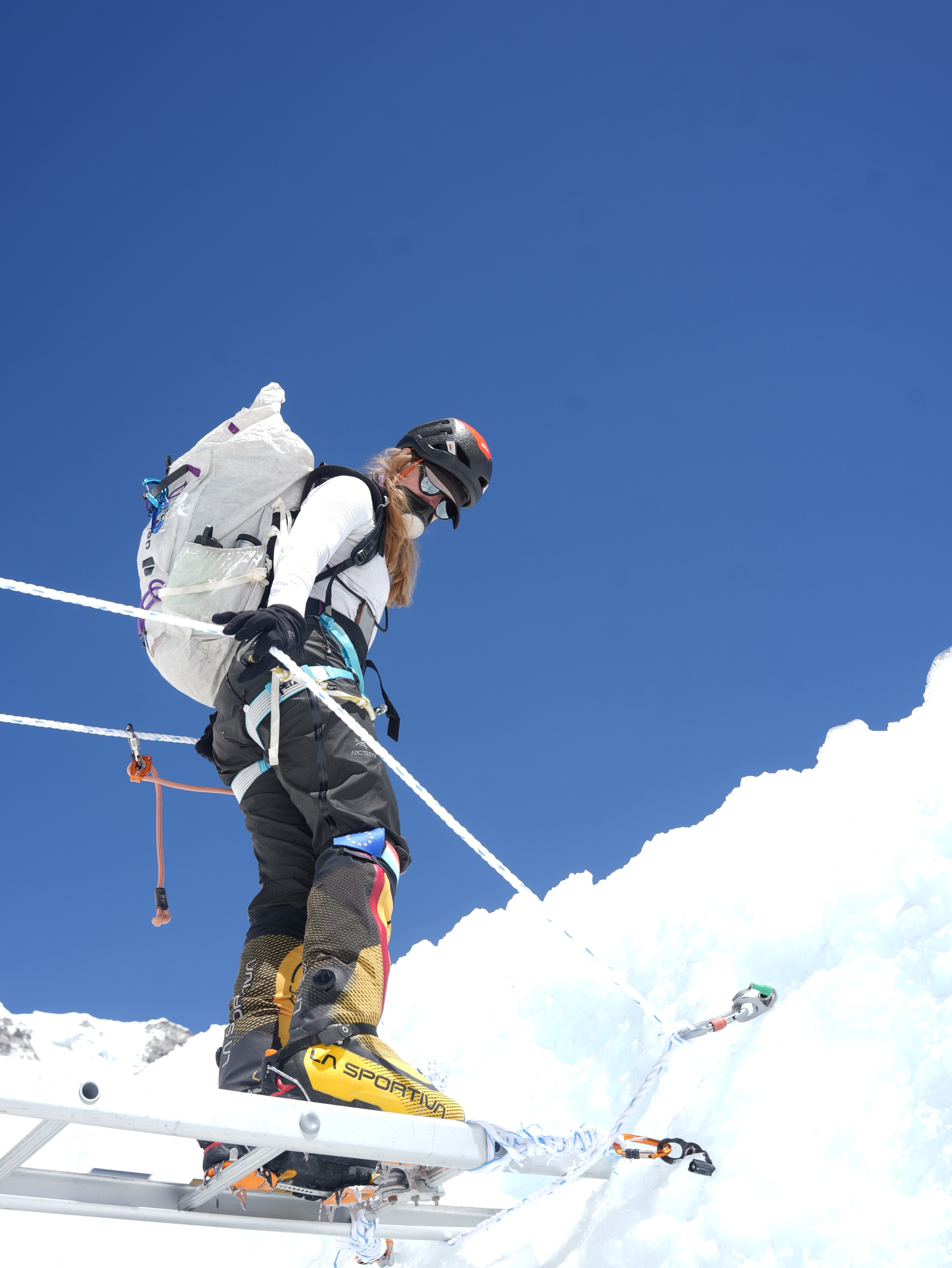
Sandra : On Everest, there are no shortcuts and every decision matters. Preparation covered all dimensions: physical training, altitude adaptation, medical readiness, mental preparation, logistics, equipment, financing and high-altitude support.
From the beginning, I knew that to approach this project responsibly, I needed the support of experienced professionals. I worked with specialists in high-altitude mountaineering, sports training, psychology, nutrition, medicine, rescue and technical preparation, and I also benefited from the advice of climbers who had already stood on Everest. Looking back, physical training was only the visible part of a much broader process.
Anaïs : Did you have doubts along the way? Moments where you thought "maybe not"?
Sandra : Doubt is part of any serious high-altitude project; what matters is to keep assessing the situation and making responsible decisions. For me Everest was all about safety and risk management. There are no guarantees in the death zone and while the Sherpas and the expedition team take the best possible care of you, you need to make sure your actions will not put anyone at risk. Doubts were a constant across the whole year of preparations. Giving myself permission to try and climb was one of the most challenging aspects and the most rewarding one. You learn that the doubts, the questioning and the fear is always present to a certain extent, and you need to learn how to move forward with it.
Up there — the human facing the extreme
Anaïs : Tell us about the hardest moment of the ascent — physically or mentally.
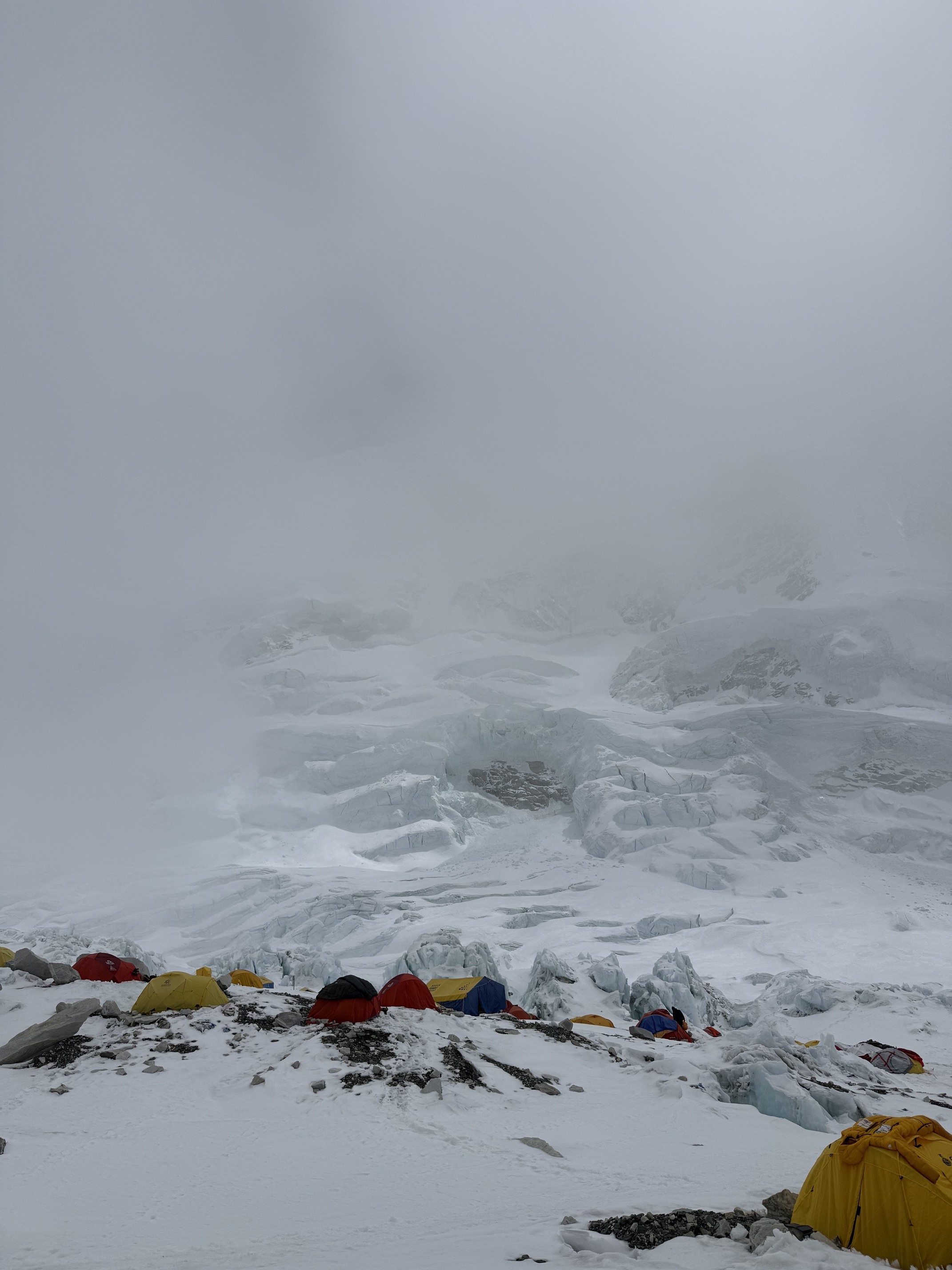
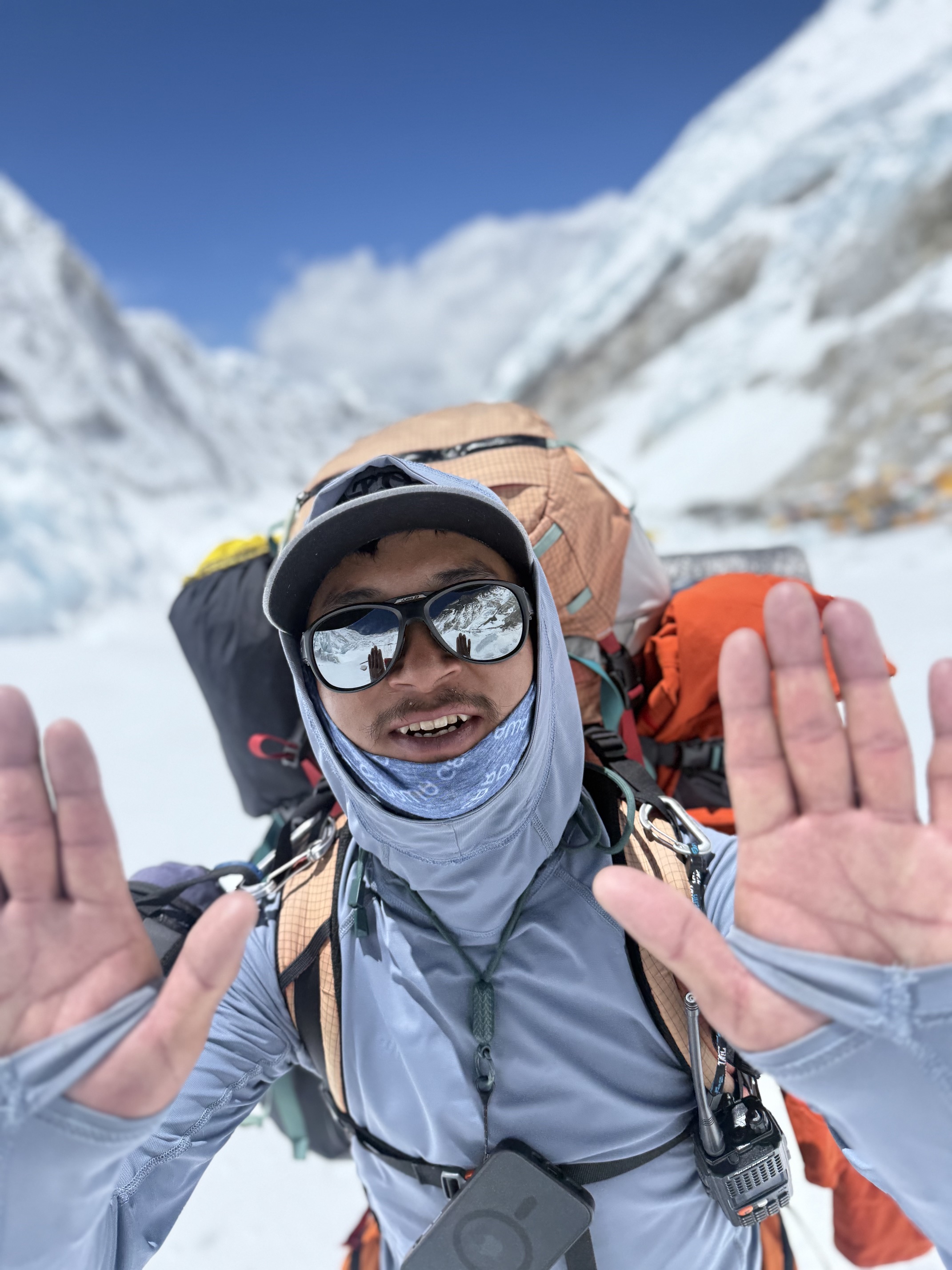
Sandra : The hardest moments were the ones that required holding firmly to my safety strategy. Having two excellent Sherpas and additional oxygen significantly increased the safety margin of the summit push, including in case of delay, emergency or unexpected developments. Knowing that I was prepared for a range of scenarios allowed me to truly appreciate the experience. Another challenge was accepting Everest’s uncertainty: illness, weather or altitude-related complications can change everything very quickly.
Anaïs : And the most beautiful, most powerful moment?
Sandra : The most powerful moment was realizing how much every decision, every step, and every person supporting the ascent had mattered. Everest was a chance to take full ownership of a complex process and to see, in one moment, how preparation, trust and discipline had come together. Back at Camp IV after the summit, after nearly 36 hours of mountaineering from Camp III, I felt immense peace and deep appreciation how special the ascent had been.
Anaïs : At the summit, at 8,849 m, what did you feel? What was your very first thought?
Sandra : Focus and gratitude. And the immediate awareness that the descent is part of the summit.
Anaïs : Did you experience fear during your ascent? How did it affect you during the ascent?
Sandra : Yes, fear was present, but I see it as a signal rather than an obstacle. When it appears, you need to rely on the systems built for that moment: preparation, risk assessment, experienced Sherpa support, additional oxygen, and clear decision-making. On our summit day, 274 climbers reached the summit from the Nepali side, making it the busiest summit day in Everest’s history. In the death zone, with that level of traffic, safety can never be taken for granted. But knowing that we had planned for a range of scenarios allowed me to manage fear and truly appreciate the experience. In fact, the summit rotation became one of the absolute highlights of the expedition.
Anaïs : What kind of thoughts did you have during your ascent? How do you keep your focus?
Sandra : On Everest, focus comes down to the next breath, the next step, and quick safety checks. Above 7,000 m, I felt very present, almost in a flow state, focused only on the objective ahead and the immediate decisions required. Below 7,000 m, I had to stay more actively disciplined: managing doubts, monitoring my body, and addressing any issue before it became a problem.
A woman in alpinism
Anaïs : Being the first Luxembourgish woman to reach the summit of Everest — what does that title mean to you? A source of pride, a responsibility?
Sandra : This ascent means that Luxembourg now has its first woman on the summit of Everest, and I receive that with gratitude and humility. Holding both Polish and Luxembourgish citizenship, I also see this milestone through a European lens: openness, freedom of movement, and connection across borders – values that have shaped my path in a very concrete way.
Anaïs : What has your experience been like navigating mountaineering as a woman?
Sandra :The mountain itself does not care who you are, but representation matters, especially in spaces where women are still less visible. Seeing women present in high-altitude climbing can help someone else take the leap.
Anaïs : What message would you like to send to the young women and girls in Luxembourg who have dreams they think are too big?
Sandra : Give yourself permission to be ambitious and audacious, while also leaving a solid margin for error. Bold goals require discipline and courage, yet if Everest taught me anything, it is that they also require support, opportunity and the perspective not to let any single outcome define you.
Plus de portraits de notre communauté :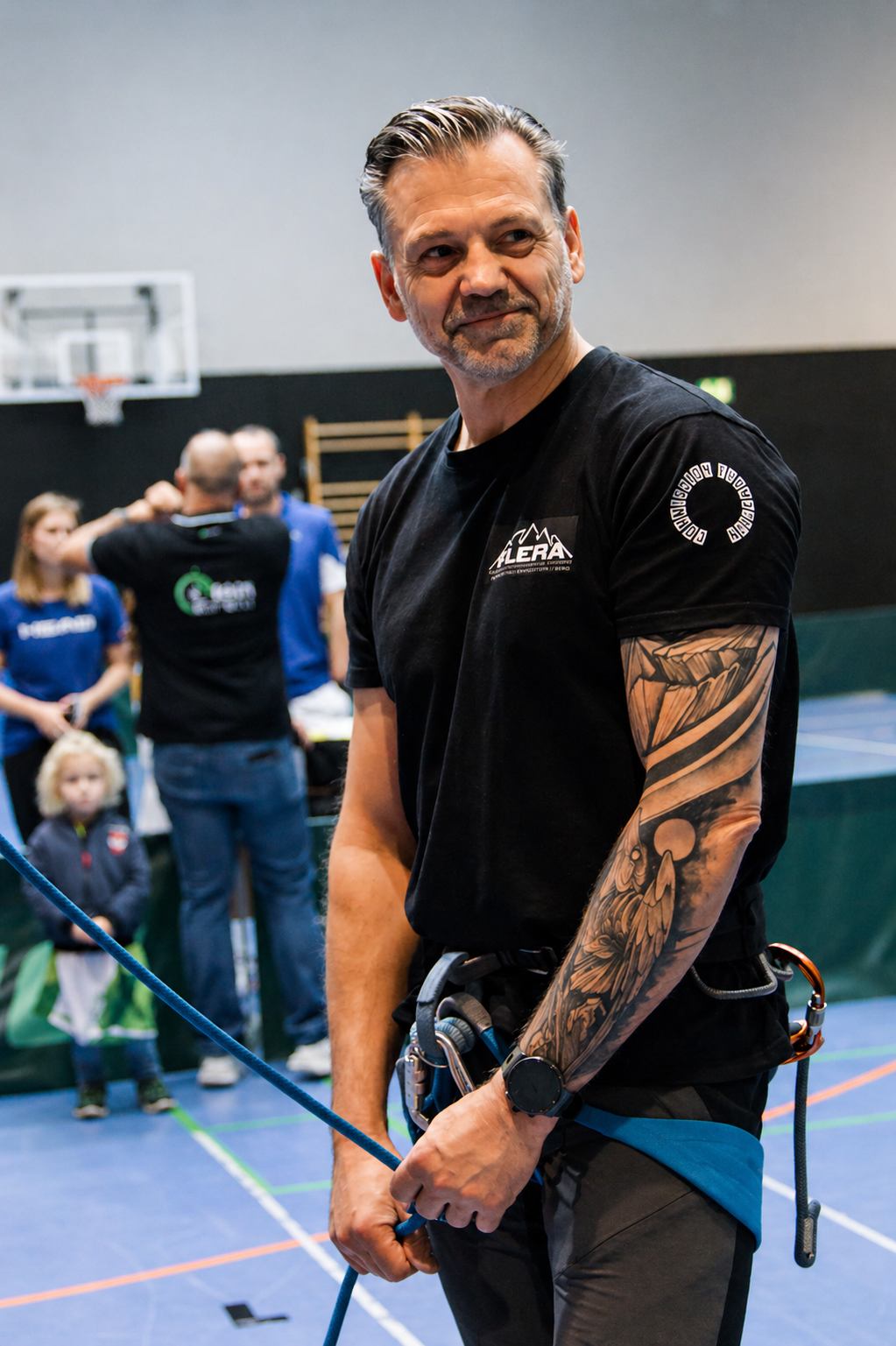
Portrait de Henri Neuman